

For a lot of homes, the loft is that quiet space above us—usually filled with old boxes, holiday decorations, or things we hardly use. But it’s actually one of the most versatile spots in the house. With a bit of thought and the right setup, it can be so much more than a storage area. It could become a cosy bedroom, a home office, a playroom, or even a walk-in wardrobe. The key is choosing furniture that really works for the space.
This is where Propafit Interiors can help. By creating bespoke furniture tailored to the unique architecture of loft rooms, we transform these often-overlooked spaces into functional, stylish extensions of the home.
Why Loft Rooms Deserve Special Attention
Lofts are unlike any other room. Their sloping ceilings, exposed beams, and tucked-away corners can frustrate standard furniture layouts. At the same time, these features give them charm and character. By leaning into those quirks and investing in fitted furniture or pieces designed specifically for the loft, you can create a room that feels both functional and inviting.
Moreover, a loft is rarely a blank canvas. Its architecture dictates how you use it:
- Sloped or pitched ceilings affect where tall furniture can stand.
- Alcoves and awkward corners often remain unused.
- Natural light, usually stronger in lofts, changes how colours and materials look.
This makes the loft a very different challenge compared with furnishing a bedroom or sitting room. Standard furniture often wastes valuable space or blocks natural light. Bespoke solutions, on the other hand, can be tailored to follow the lines of the room, turning limitations into opportunities.
Furniture Solutions for Loft Rooms
Furnishing a loft is less about filling space and more about working with its shape. Every sloped ceiling, alcove, and corner presents a challenge—but also an opportunity. The right furniture turns those quirks into clever design features.
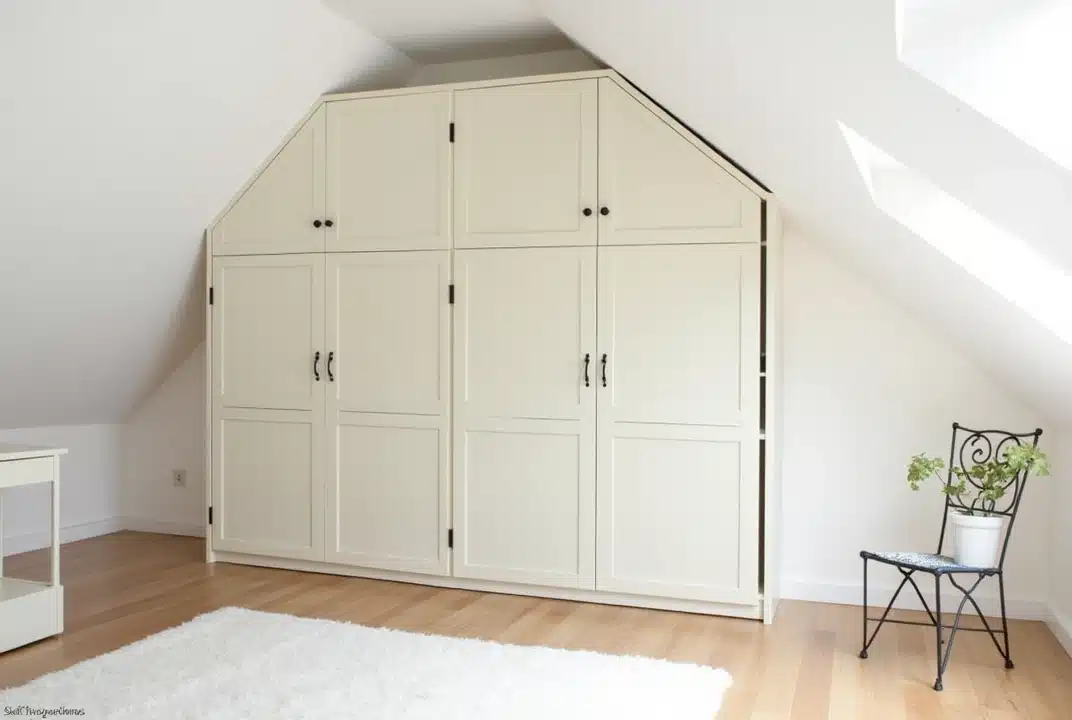
Built-in Wardrobes
Wardrobes are often the hardest piece to place in a loft. Freestanding furniture options rarely sit well under eaves or angled ceilings, leaving gaps that serve no purpose. Built-in wardrobes solve this problem by following the shape of the ceiling, filling awkward recesses and making every inch count.
With sliding doors or mirrored fronts, they can also open up the space visually, helping a smaller loft feel brighter and larger.
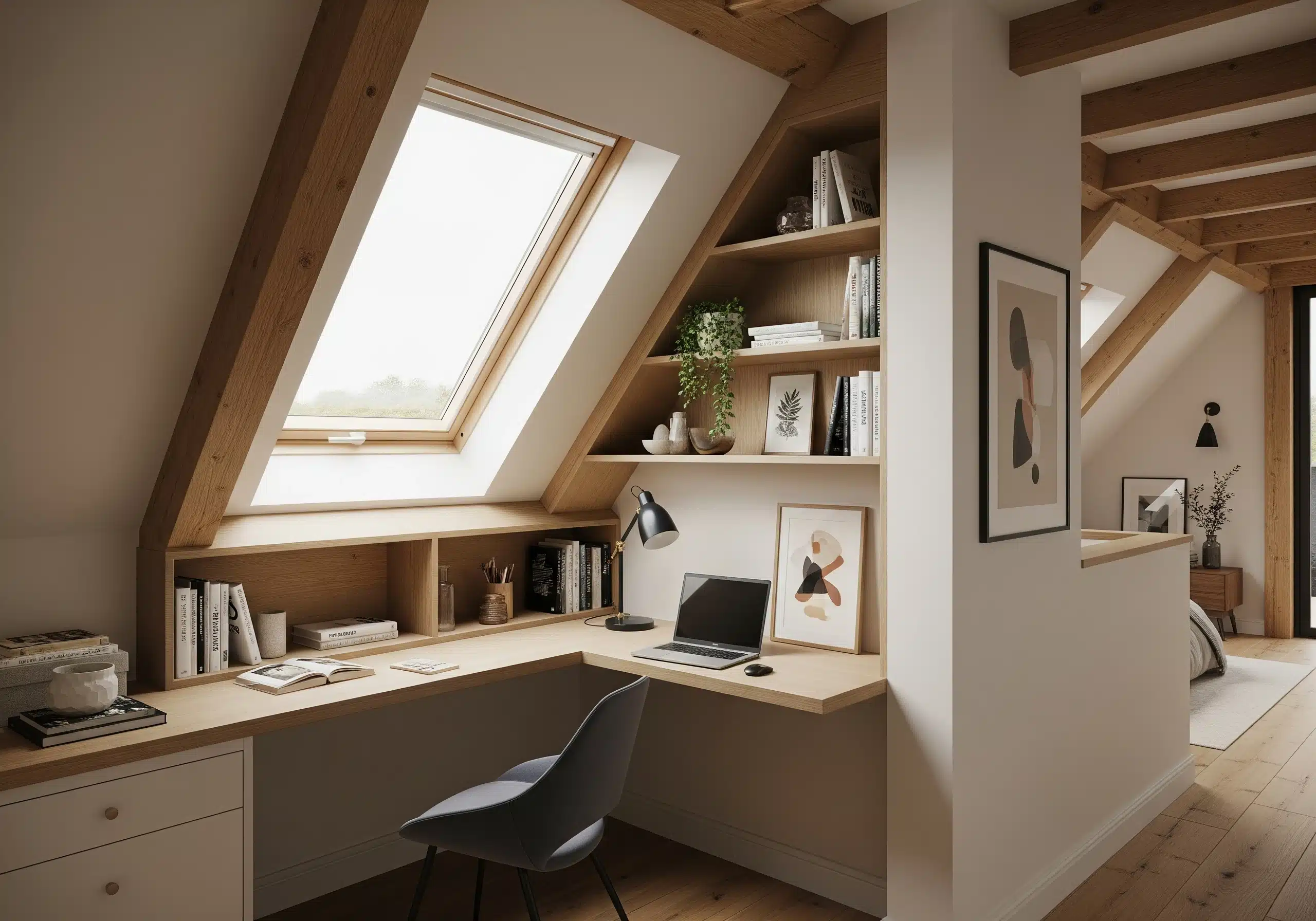
Alcove Desks and Study Corners
A sloping ceiling might rule out a tall bookcase, but it is the perfect spot for a desk. By fitting a desk into an alcove, the loft becomes an ideal study or home office. With natural light pouring from roof windows, it is often a far better working environment than a dark corner elsewhere in the house.

Pair the desk with built-in shelving above or beside it, and suddenly what once was dead space becomes a productive hub.
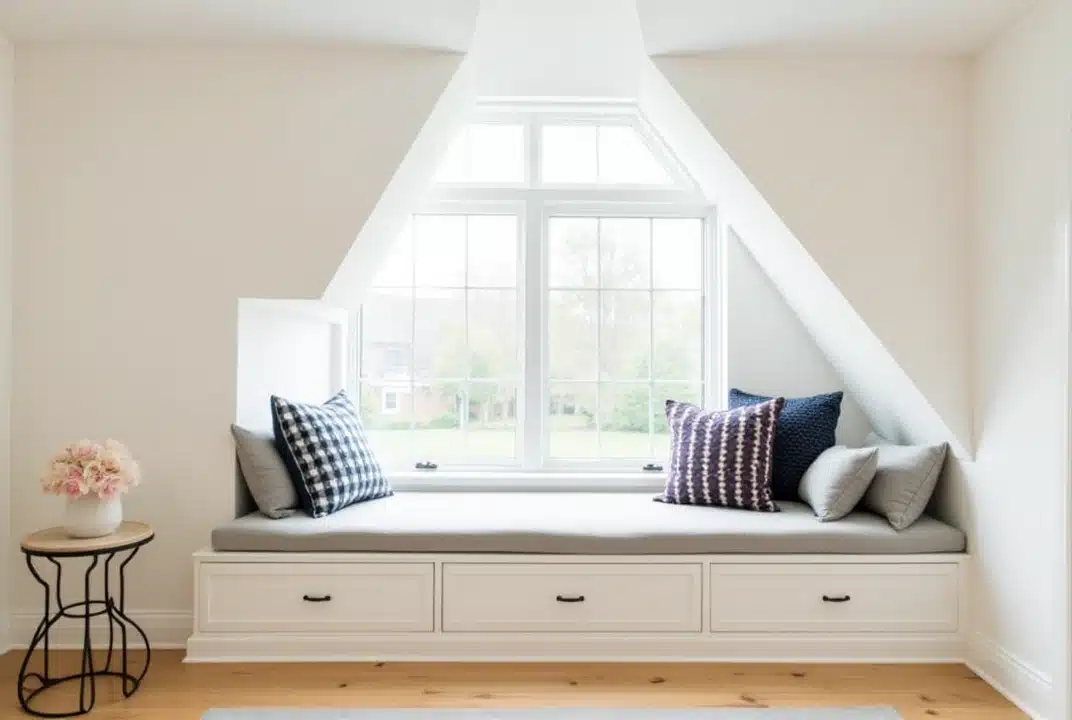
Seating that Works with Slopes
Where a standard sofa may feel too bulky, bespoke seating can be designed to fit beneath eaves or along low walls. A built-in bench with storage beneath doubles as seating and a tidy solution for hiding away books, blankets, or children’s toys. Add cushions, and it can become a reading nook that makes full use of the loft’s natural light.
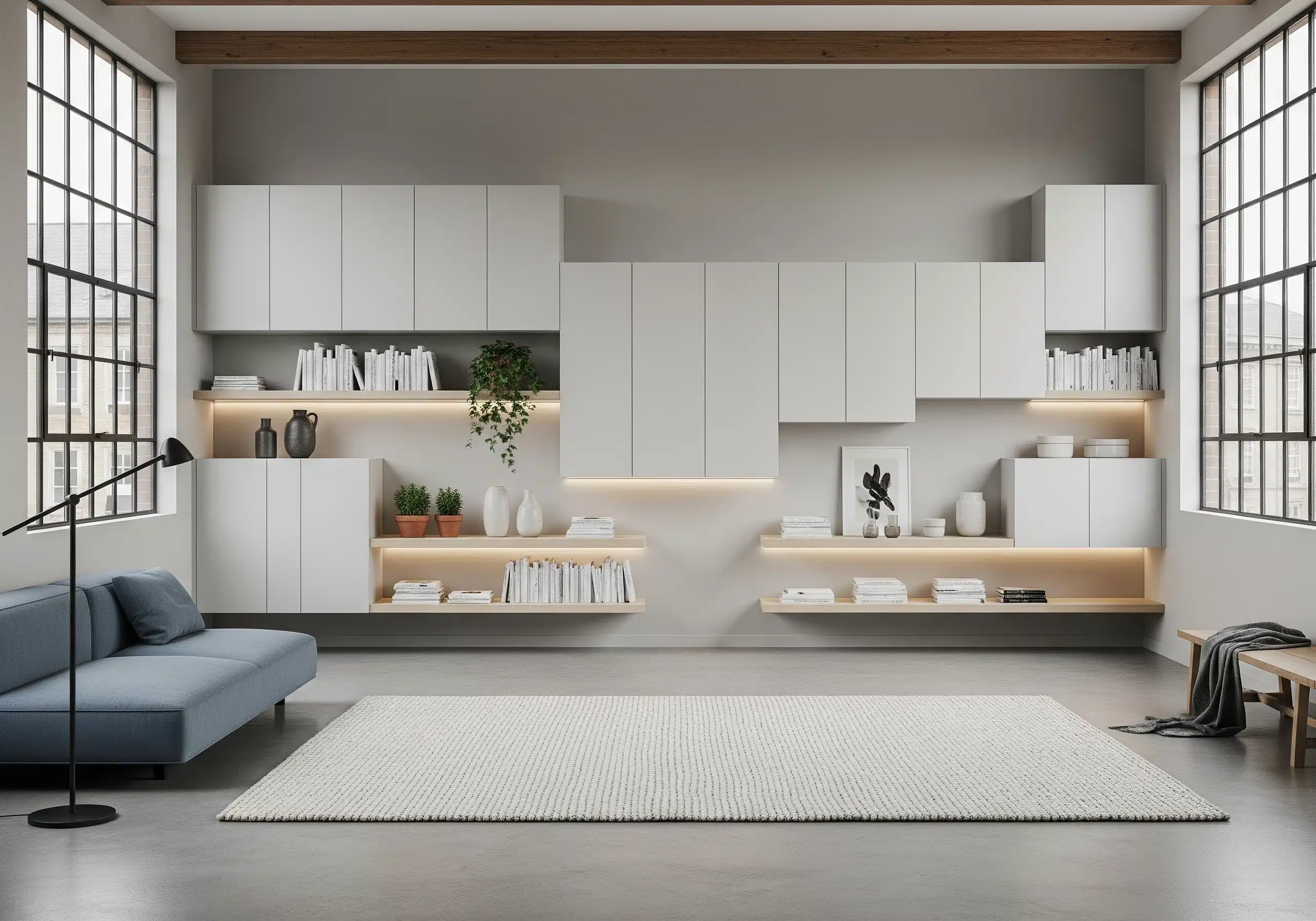
Wall-Mounted Storage
Floor space is precious in lofts, so walls take on extra importance. Wall-mounted shelves, cupboards, and even fold-down desks keep the footprint clear, making the room feel larger than it is. Floating shelves across the higher points of a loft wall are particularly effective for storing books or displaying decorative pieces without crowding the floor.
Walk-in Wardrobes in Spacious Lofts
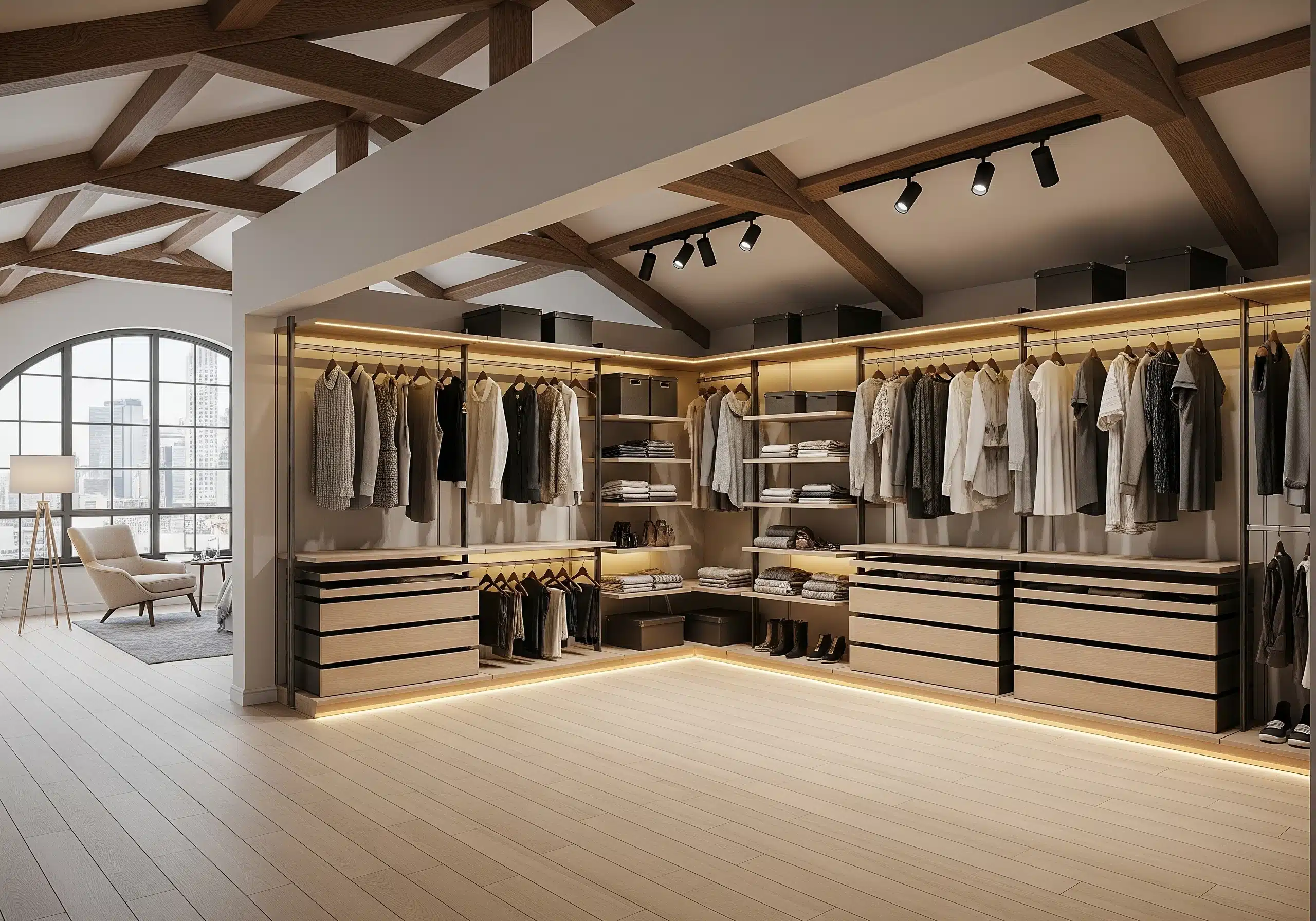
For those fortunate enough to have a larger loft, a walk-in wardrobe transforms the space entirely. With rails, shelving, and drawers arranged around the perimeter, the central floor remains clear, giving a boutique-like feel. Lighting is crucial here—spotlights or LED strips ensure that the space feels welcoming and practical, rather than cavernous.
Suggested read: Fitted or Freestanding Furniture? Finding the Style that Suits You in 2025
Styling the Loft Room
Furniture gives a loft structure, but styling gives it character. Because lofts have unique features, styling should highlight them rather than hide them.
- Use light tones on walls and ceilings to make the most of natural daylight and avoid the room feeling enclosed.
- Introduce bold accents sparingly—a statement rug or an upholstered chair can add personality without overwhelming the space.
- Play with height by using lower-profile furniture beneath slopes and taller pieces in the centre where the ceiling is highest.
- Incorporate texture with wood, fabric, or exposed beams to keep the room feeling warm and inviting.
Making the Most of Loft Quirks
One of the greatest strengths of a loft is its unconventional shape. Rather than fighting against alcoves, slopes, and corners, lean into them:
- An alcove can become a fitted wardrobe.
- A low-ceilinged corner can be a play zone for children.
- A slope can frame a cosy bed nook.
- A narrow recess can become shelving or display space.
With bespoke furniture, these quirks become part of the design, giving the loft a personality that no other room in the house can replicate.
Frequently Asked Questions on Loft Room
Can a loft room really be used as a bedroom?
Yes, many homeowners convert their loft into a bedroom. The key is making sure the furniture fits the space comfortably. A bespoke bed frame under a sloped ceiling, combined with fitted wardrobes, can create a proper bedroom that feels just as welcoming as any other in the house.
What type of furniture works best under sloped ceilings?
Low-profile furniture is usually the most practical—such as built-in drawers, desks, or seating that sits neatly beneath the slope. Propafit Interiors often designs wardrobes and storage to follow the angle of the ceiling, which ensures no space goes to waste.
How can I stop my loft from feeling cramped?
Light is your best friend. Use pale colour schemes, mirrored wardrobe doors, and wall-mounted storage to keep the floor clear. Furniture that is designed specifically for the loft makes a big difference because it prevents awkward gaps that can make the room feel smaller than it is.
Is freestanding furniture a bad idea for lofts?
Not at all. Freestanding furniture can be useful if you like the flexibility of rearranging the space. The trick is to combine it with fitted pieces so you benefit from storage and practicality, while still being able to change the layout when you want a refresh.
Do I need bespoke furniture for my loft?
Not always, but it often makes the most of the space. Standard furniture can leave empty corners or gaps under slopes. Bespoke pieces, designed with your loft’s dimensions in mind, turn those awkward spaces into useful storage or attractive features.
Final Thoughts: Making the Most of That Excess Space
A loft room is not just an extra square metre or two on the floor plan. When furnished with care, it becomes a retreat, a workspace, a dressing room, or simply a quiet place to enjoy natural light and seclusion. The key is to choose furniture that respects the space and makes the most of its character.
At Propafit Interiors, we create bespoke pieces that turn awkward lofts into rooms that truly belong in the home. Whether your loft is large or small, angled or open, we can help you unlock its full potential. If you are interested in transforming your space, contact Propafit Interiors now! Call us at 01462 814080 or message [email protected].